PRACE News

Category: Project Access Success Stories

Nucleon Structure Using Lattice QCD Simulation with Physical Pion Mass

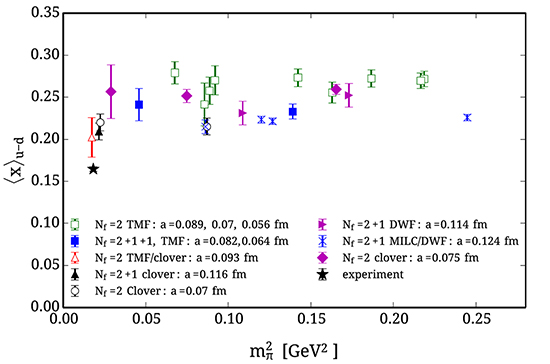
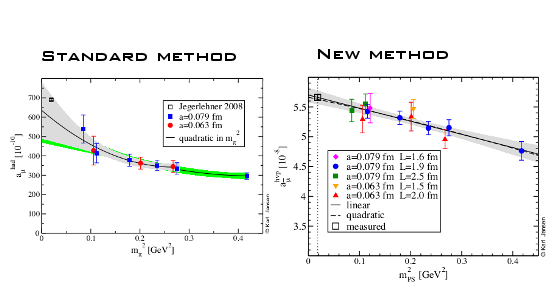
The goal of this project is to understand the properties of elementary particles such as the proton, which forms most of the ordinary matter around...

Supercharged Supercapacitors

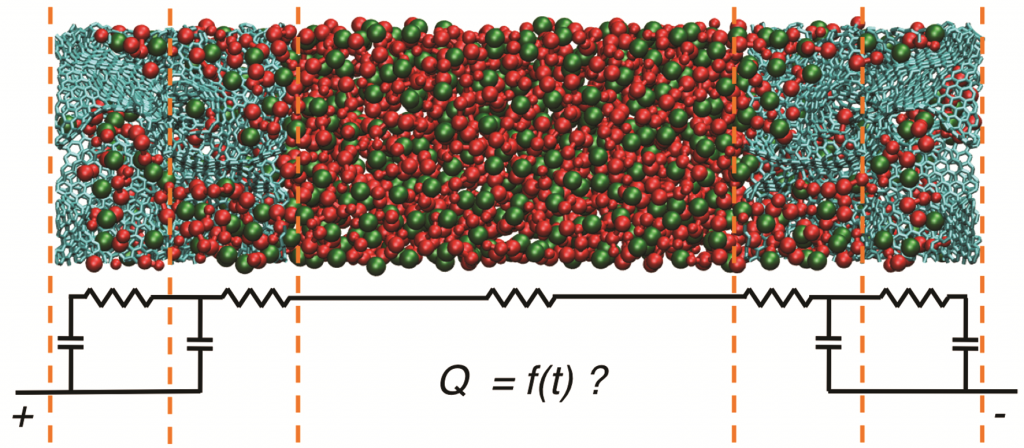
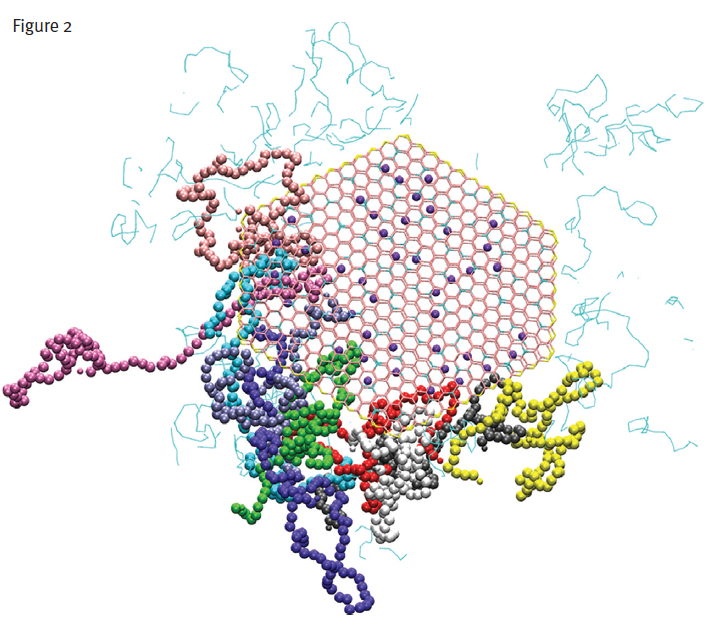
Nanoporous carbon is being used to create a new generation of supercapacitors that have greatly improved capacitance compared to their precursors, with little effect on...

Numerical Simulations to Explain the Intensity of Star Formation

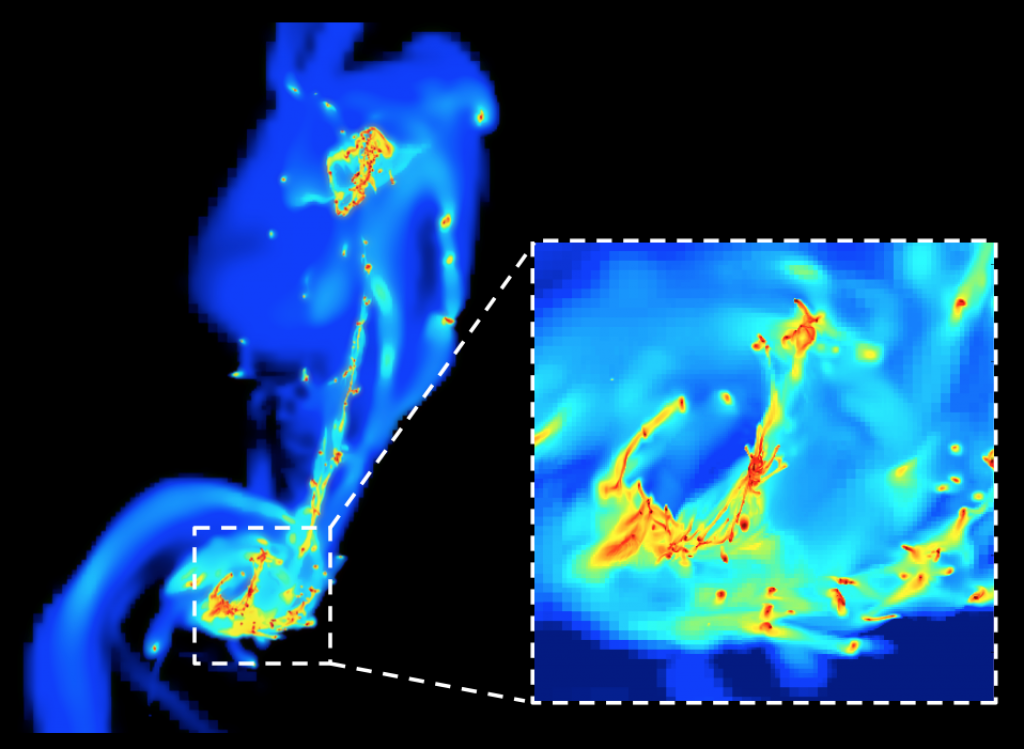
Understanding the origins of our universe is the foundation to understanding its future. Professor Frederic Bournaud and his international team of collaborators are leveraging the...

Pair-Dominated Plasmas and Radiation in Ultra Intense Fields

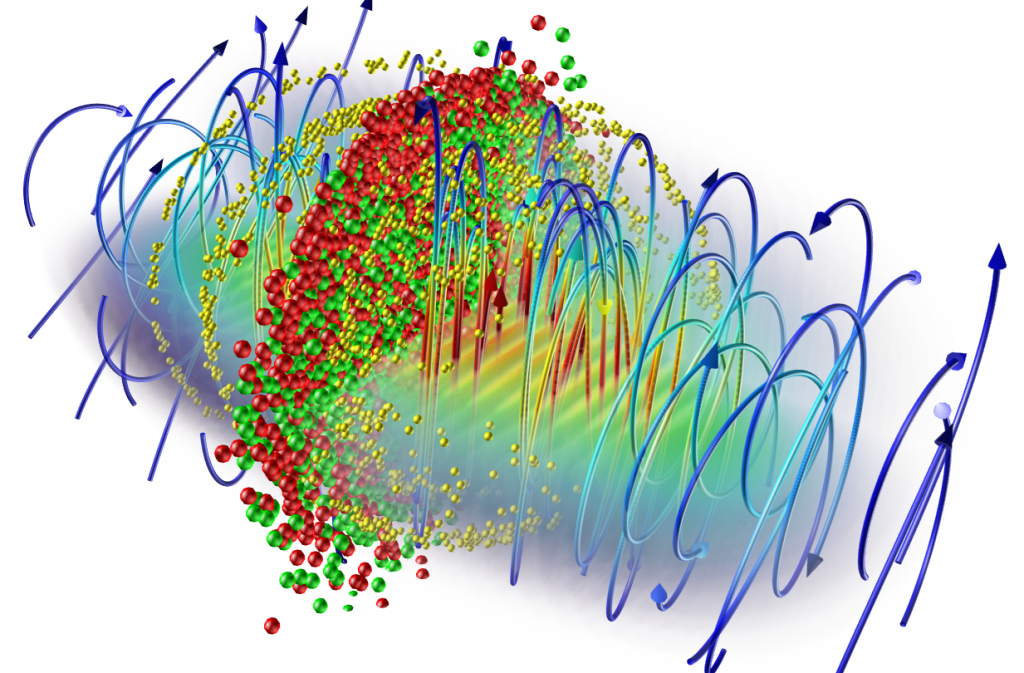
Leveraging the petascale computing power of SuperMUC, an international team of researchers performed 2D/3D simulations of laser absorption in dense electron-positron plasmas self-consitently created via...

The virtual laboratory

Supercomputers can be used to simulate materials at vastly diverse scales, from the flow of air past an aeroplane’s wing down to the movement of...

PRACE help researchers calculate mass difference between neutrons and protons

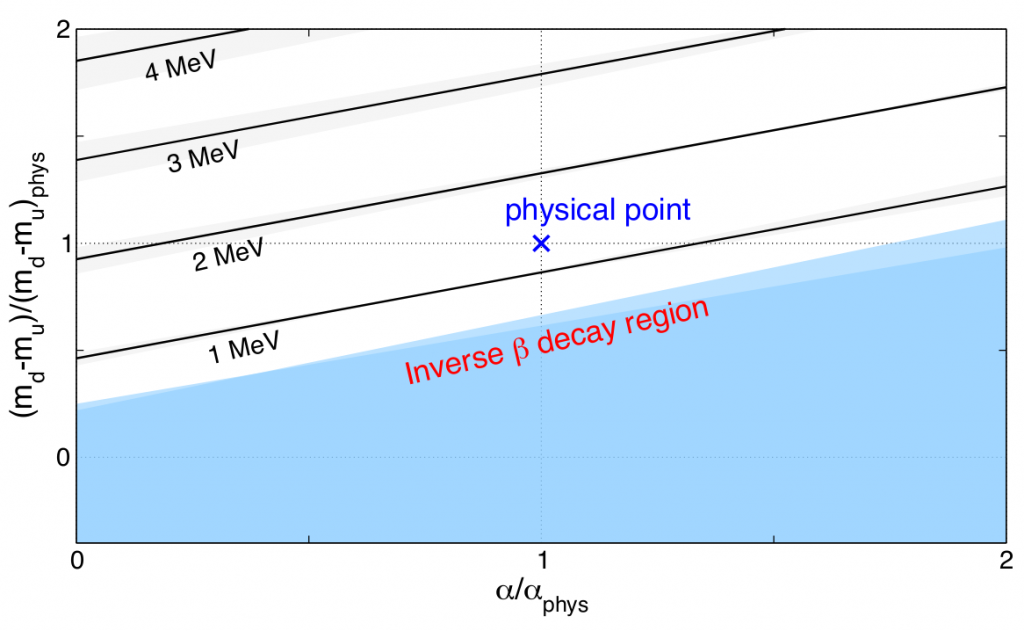
With the help of PRACE HPC resources, a team of physicists from France, Germany, and Hungary headed by Zoltán Fodor, a researcher from Wuppertal, has...

Working with PRACE: an insider’s perspective

Professor Stephan Roche of the Catalan Institute of Technology in Spain is currently working on his project Longitudinal and Transverse Electronic Transport in Atomically Doped...

Looking beyond the Standard Model

PRACE awarded millions of core hours on three of Europe’s most powerful supercomputers (17.5 million on JUQUEEN (JSC@GCS); 7.5 million on FERMI (CINECA); 5 million...

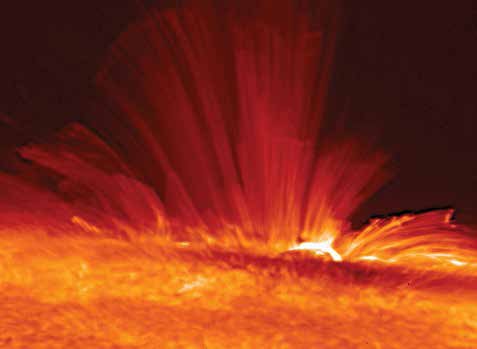
Simulating activity on the Sun with large plasma models

The SunFlare project group has studied the relationship between the sub-surface layers and visible layers of the Sun, with a focus on its active regions....

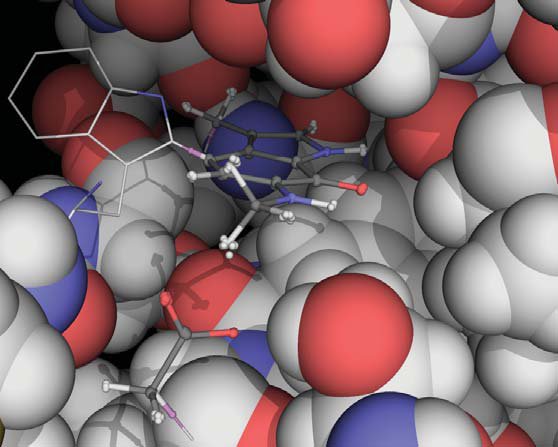
Nature’s Subway: Do enzymes use tunneling to take a shortcut?

Enzymes are complex, highly efficient natural catalysts – i.e. substances that are able to greatly accelerate the rate of a chemical reaction. Understanding how they...

Categories

 
Filter by Date

Contact

For all questions about PRACE Communications, promotional and press materials, social media, and publications:

Email: communication@prace-ri.eu 

Phone:  +32 2 613 09 28.

PRACE
Privacy Overview

This website uses cookies so that we can provide you with the best user experience possible. Cookie information is stored in your browser and performs functions such as recognising you when you return to our website and helping our team to understand which sections of the website you find most interesting and useful.