
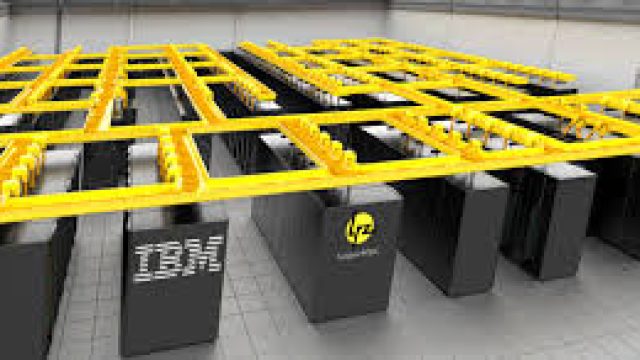
On Monday 23 June 2014 at 13:15 during the Opening Session of the 2014 edition of the International Supercomputing Conference (ISC) in Leipzig, Germany, the PRACE-ISC Award will be presented to Alexander Breuer, TU München; Alexander Heinecke, TU München; Sebastian Rettenberger; TU München; Michael Bader, TU München; Alice-Agnes Gabriel, LMU München; Christian Pelties, LMU München for their paper entitled “Sustained Petascale Performance of Seismic Simulations with SeisSol on SuperMUC”.
PRACE, the Partnership for Advanced Computing in Europe, awards a prize to the best paper submitted to the ISC Research Paper Sessions and the PRACE Scientific Conference in one of the following areas:
- a breakthrough in science achieved through high performance computing
- an algorithm or implementation that achieves a significant improvement in scalability or performance
- a novel approach to performance evaluation on a massively parallel architecture
The PRACE Scientific Steering Committee selects the paper to receive the Award, which will be presented at the ISC Opening Session on Monday 23 June 2014 at 13:15. The winner of the PRACE ISC Award will receive sponsorship for participation in a training event, or a conference relevant to petascale computing.
Seismic simulations in realistic 3D Earth models require peta- or even exascale compute power to capture small-scale features of high relevance for scientific and industrial applications. In this paper, we present optimizations of SeisSol — a seismic wave propagation solver based on the Arbitrary high-order accurate DERivative (ADER) Discontinuous Galerkin method on fully adaptive, unstructured tetrahedral meshes — to run simulations under production conditions at petascale performance. Improvements cover the entire simulation chain: from an enhanced ADER time integration via highly scalable routines for mesh input up to hardware-aware optimization of the innermost sparse-/dense-matrix kernels. Strong and weak scaling studies on the SuperMUC machine demonstrated up to 90% parallel efficiency and 45% floating point peak efficiency on 147k cores. For a simulation under production conditions (108 grid cells, 4.8*1010 degrees of freedom, 5 seconds simulated time), we achieved a sustained performance of 1.09 PFLOPS
Alexander Breuer
The simulation video of SeisSol can be found here.
This article was first published on www.prace-ri.eu on Friday 6 June 2014.


